



-by Rachel Thomas-Murphy
Biophilic Design isn’t about plants. It’s about coming home.
There are words in the design industry that get overused until they lose their meaning.
Biophilic might be one of them.
Somewhere along the way, biophilic design became synonymous with positioning your beloved banana plant in a corner or covering a wall in your conference room in moss and calling it a day.
It’s much more than that.
The word itself means “love of life” or “love of living things”. But what I think it really means is this:
Designing spaces our nervous system already knows how to trust.
Long before we built cities, office buildings, hospitals and neighborhoods, we belonged outdoors.
For a long time, our brains learned to interpret sunlight, moving water, changing seasons, fresh air, birdsong, and expansive views as safety.
Then almost overnight, in evolutionary terms, we moved inside.
Now we spend almost 90% of our life indoors.
Let’s not think about how much of that is behind screens, like I’m doing right now. And we wonder why we’re anxious? And exhausted. And disconnected.
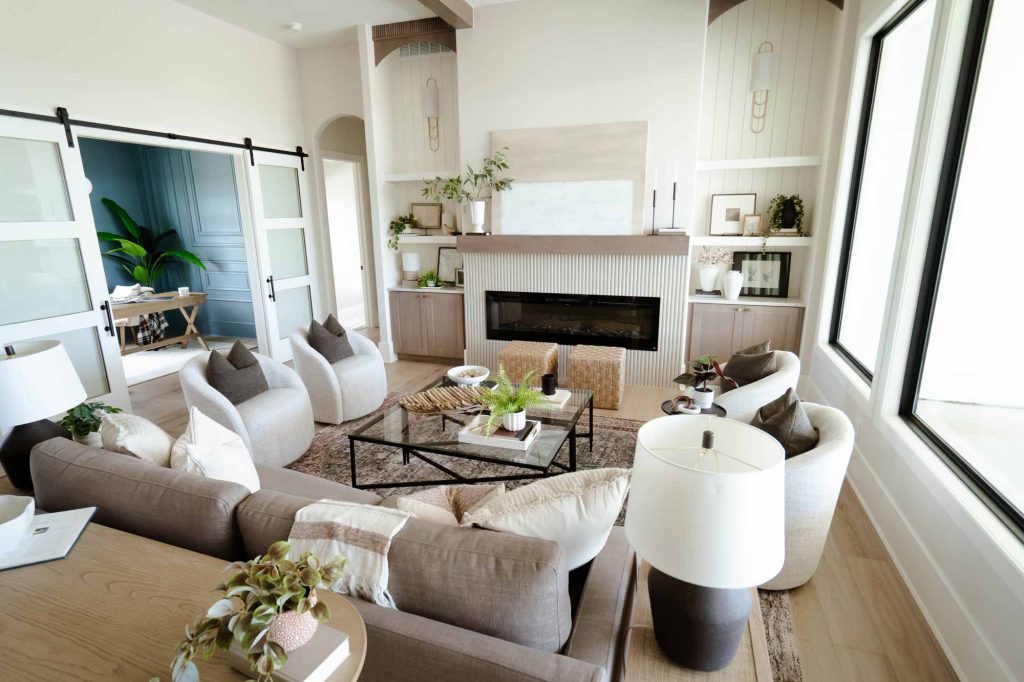
This is where design becomes fascinating. People often think good design is about aesthetics. It’s not. Good design is about biology. When sunlight changes throughout the day, our circadian rhythm responds. When we see trees through windows, our blood pressure can decrease. Natural materials tend to lower stress compared to synthetic. Think about how sitting on a soft cotton sofa versus grandma’s plastic covered one. Big difference, right? Curved forms feels safer than sharp, aggressive geometry. Even something as simple as watching a fire or watching the leaves fall gives our brains what’s called “soft fascination”- a gentle form of attention that allows our mind to rest and reflect. Nature isn’t just beautiful.
It’s regulating.
At Greyten, we talk about designing for wellness. Not because it’s the latest buzzword. Wellness is an outcome of good design. Because every building is quietly influencing the people inside it. Every day. Every hour. Whether we intended it to or not. Design can’t solve every problem. But it can help people breathe a little deeper. Sleep a little better. Focus a little longer. Connect a little more.